Why Germany Is Not Ready for a Major War
Bigger budgets and revised doctrines — and why Germany still is not ready for a major war.
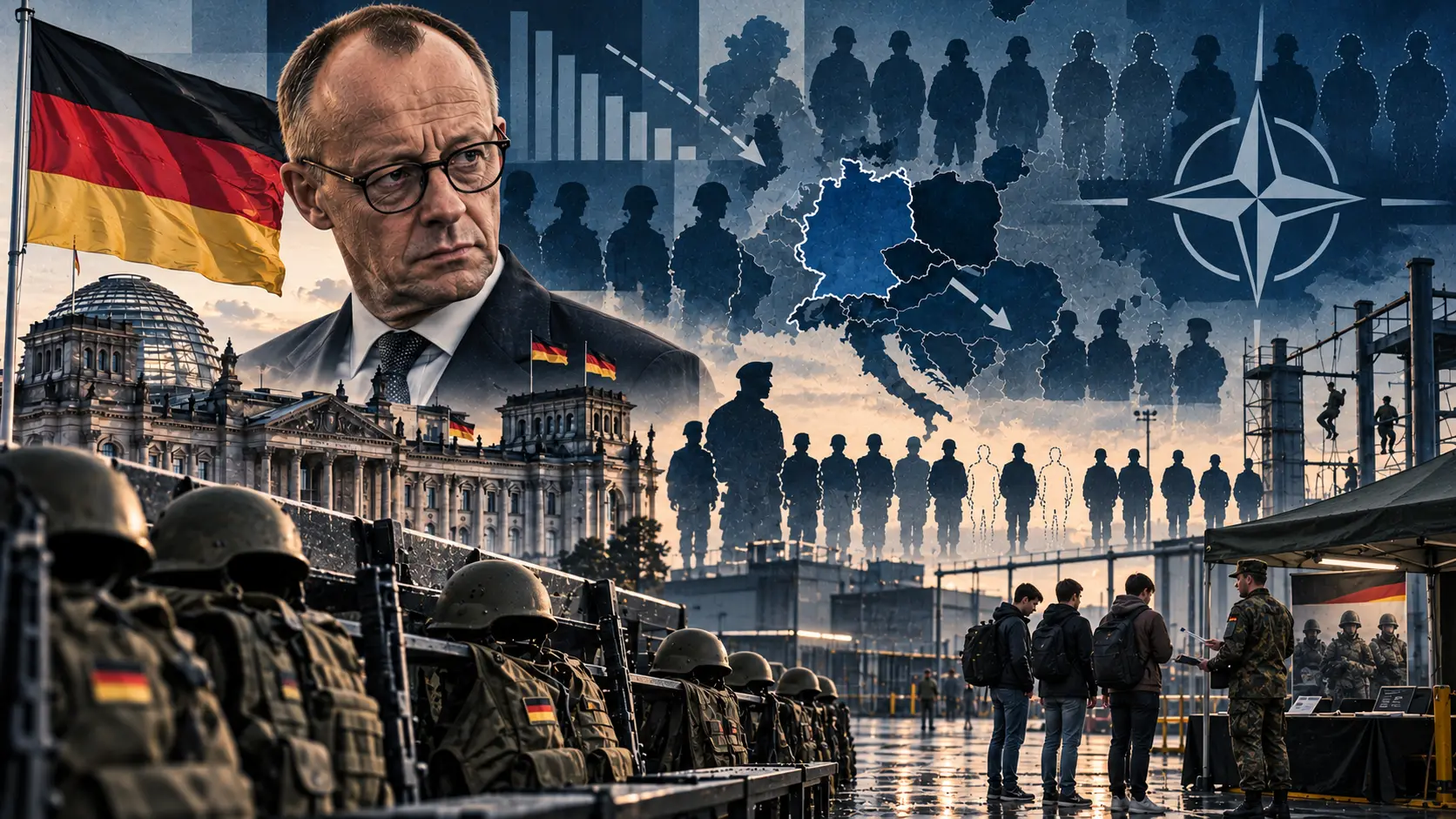
Since russia launched its full-scale invasion of Ukraine, European governments have been actively revising their defense strategies, increasing budgets, and searching for the political will to confront long-term security threats. But Germany — one of the key players in the European Union and NATO — illustrates problems that run much deeper than underfunding. Its most vulnerable point is the human factor: the country with Europe's largest economy has found itself structurally unprepared for organized mobilization in the event of a high-intensity conflict.
The suspension of mandatory conscription in 2011 was a turning point in Germany's security policy. Angela Merkel's decision, made during a period of relative stability, effectively dismantled not only the system for staffing the military, but also the very notion of societal readiness for defense. For more than a decade, no alternative structure was created to respond quickly to crisis scenarios. As a result, when the geopolitical landscape shifted in 2022, Germany had only 183,000 active soldiers in the Bundeswehr, while the reserve formally included around 950,000 people — yet only about 55,000 of them receive regular training and can realistically be considered deployable. Even with substantial human resources on paper, the system remained inactive and disorganized. Technical readiness adds another layer: according to internal reports, in some branches of the armed forces, fewer than one-third of military vehicles are operational.
But numbers alone do not explain the core issue: why Germany cannot quickly mobilize its manpower the way Ukraine did. The answer lies partly in demographics. As of 2023, nearly 30 percent of Germany's population has a migration background. In the age group most relevant for military service — 20 to 40 — the share is even higher. During just 2015–2016, Germany accepted more than 1.2 million refugees, mostly from the Middle East and Africa. They legally reside in the country, hold jobs, receive social benefits, and in some cases have citizenship — but their level of integration into Germany's political and cultural fabric remains extremely low. Surveys among first-generation immigrants show that the overwhelming majority are not willing to participate in an armed conflict on behalf of the state they live in.
Continue reading with The Consulo Membership
Analysis, the weekly Brief and the full member archive.
Already a member? Sign in